The Missing Layer in America’s Military Space Strategy
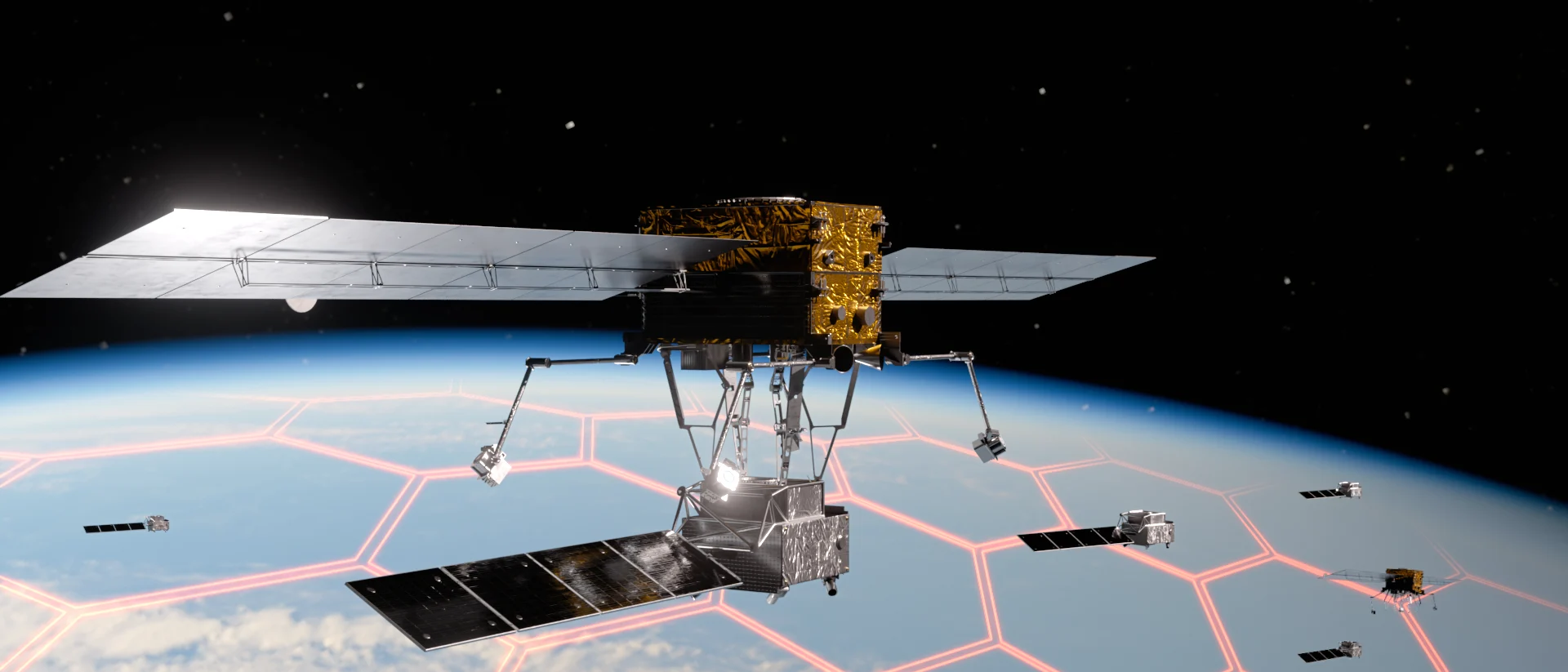
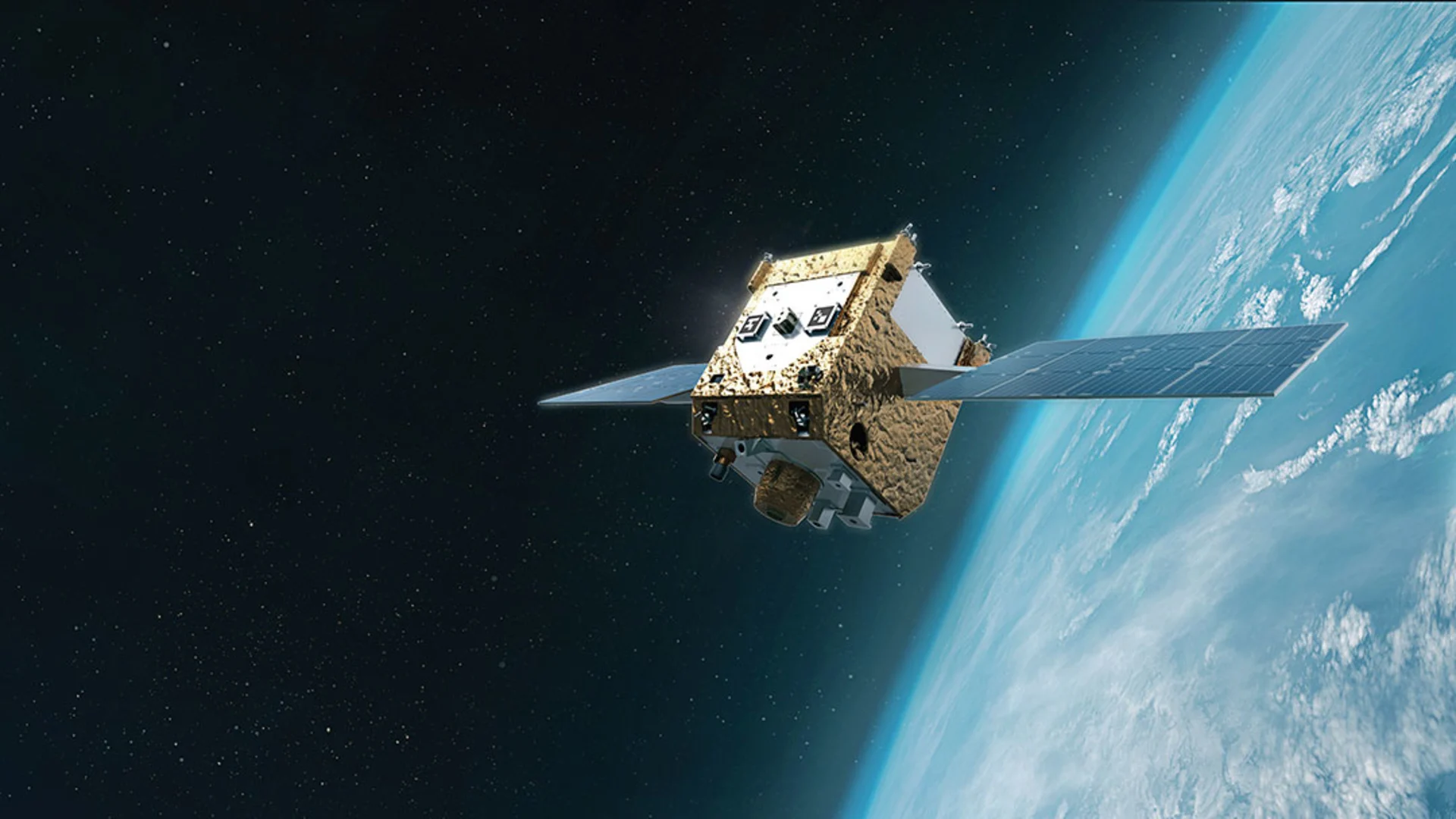
Pictured above: A depiction of Astroscale U.S.’s maneuvering capabilities applied to a national security constellation.
The U.S. does logistics better than anyone on Earth – so why is it deprioritized in orbit?
Logistics has always been the decisive variable in U.S. military power. For decades, the U.S. Air Force (USAF) demonstrated that global reach and power are only possible when built upon a disciplined, resilient sustainment architecture. Airpower achieves control of the skies, but logistics ensures we keep it.
My experience in both air and space domains reveals a simple truth: logistics is not an enabler — it is the foundation of domain superiority. The nation that fields the first mature orbital logistics infrastructure will define the tempo, resilience, and deterrence norms of the future of space operations. If the U.S. builds the in-space logistics backbone that space power demands, America will maneuver, deter, and defend with confidence. If we do not, we will cede initiative to adversaries who already understand what history has proven.
What Airpower Teaches Us About Logistics
During my tenure as an aircraft maintenance and logistics officer, culminating as Director of Logistics for Air Force Special Operations Command, I oversaw sustainment for aircraft ranging from the MQ-1/9 and F-16 to the B-1, A-10, AC-130, CV-22, and MC-130 tanker fleets. Across every aircraft, theater, and deployment, one rule never changed: operations succeed only when logistics do.
Operation Desert Storm proved this. Tanker bridges stretched across continents, depot pipelines surged, and aircraft availability rates remained high because the logistics enterprise functioned at scale. By contrast, the early days of Operation Enduring Freedom revealed how fragile operations can become when sustainment capacity is thin — dispersed bases, overstretched tankers, and long supply chains tested the system daily. Lesson learned: aircraft readiness is only as good as your logistics.
This same principle applies to the space domain, but the picture is not looking good. For decades, U.S. satellites have been single-use systems: no refueling, repair, life extension, or depot maintenance. Today, that model is a major strategic liability, especially as the United States Space Force (USSF) pursues the core tenets of Competitive Endurance: delivering domain awareness, deploying resilient architectures, and holding adversary space assets at risk. Each of these requires in-space logistics. Sensors must maneuver and persist, constellations must be serviced and reconstituted, and deterrence requires advantages that only fuel and sustainment provide. Simply put: Competitive Endurance is impossible without competitive sustainment.
Moreover, as adversarial capabilities accelerate, a lack of logistics creates a critical vulnerability in emerging national security programs, especially the Golden Dome for America. These systems will require substantial propellant, rapid repositioning, and routine maintenance. Without in-space logistics, they cannot deliver persistent presence, resilience, or credible deterrence.
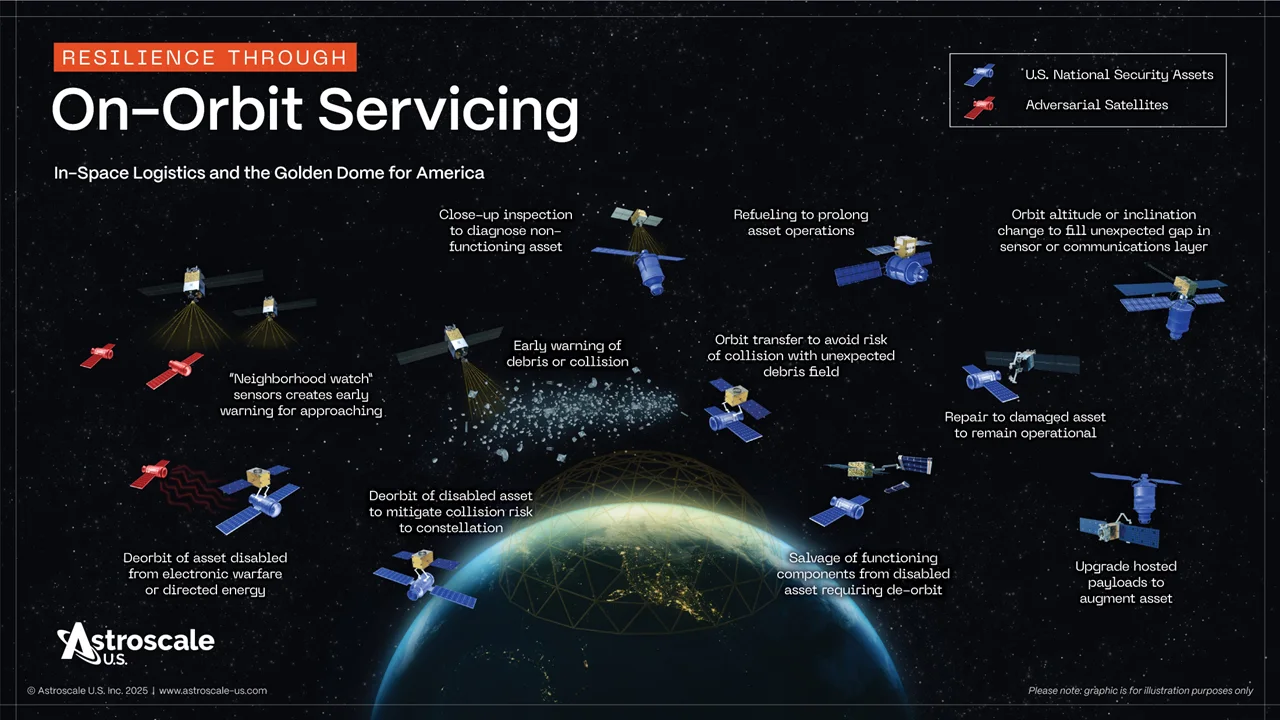
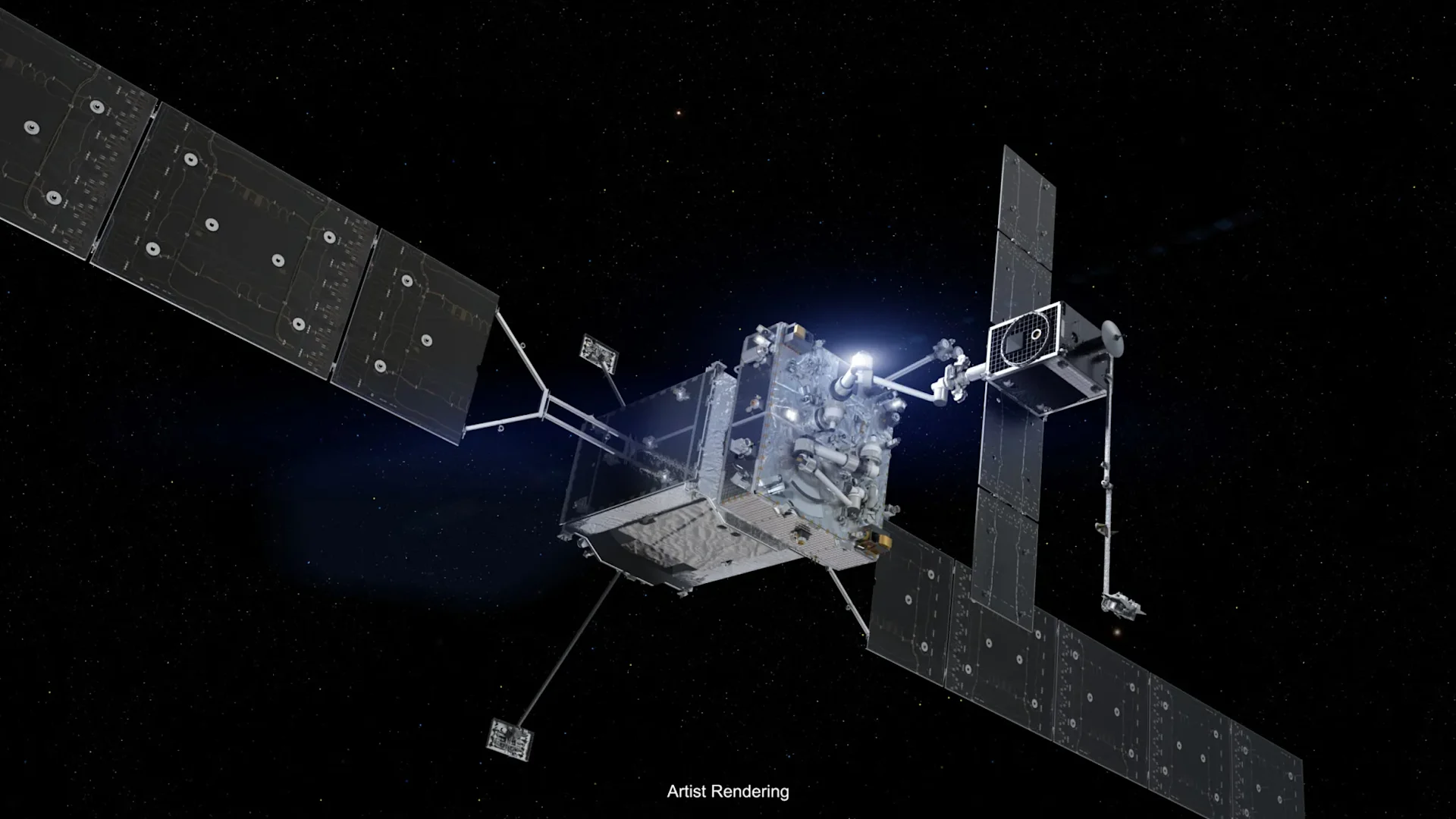
Examples of opportunities for logistics capabilities to augment the resilience of the Golden Dome for America.
Shifting from expendable satellites to a sustainable, serviceable space infrastructure mirrors the transformation airpower underwent a century ago. The USSF must now do what the USAF did with aerial refueling, depot maintenance, and logistics command integration: create a dedicated system to sustain and regenerate combat power in its domain.
China’s Logistics Enterprise is Advancing
If the United States fails to lead in space logistics, it risks ceding the sustainment advantage to China, which already couples civil and military investment under a unified national strategy. China’s People’s Liberation Army Strategic Support Force (PLASSF) is pursuing a full spectrum of on-orbit logistics, including robotic servicing, reusable spacecraft, rapid launch cycles, and cislunar sustainment planning. In 2022, a Chinese geosynchronous servicing vehicle performed proximity operations and possible grappling maneuvers with another object in GEO. Chinese ministry documents identify on-orbit refueling and servicing as operational goals by the mid-2020s, a capability China has already demonstrated in GEO.
Yet, while one of the U.S.’s primary adversaries is already testing a space logistics enterprise, America is still drafting requirements. The USSF is only now considering logistics as a formal mission area. Space Systems Command recently acknowledged that operational on-orbit logistics units do not yet exist, and institutional development remains in its infancy.
Furthering in-space logistics is crucial for the U.S. to maintain its leadership and its advantage in space, especially as China’s capabilities advance.
Logistics in Space is Real — and Maturing
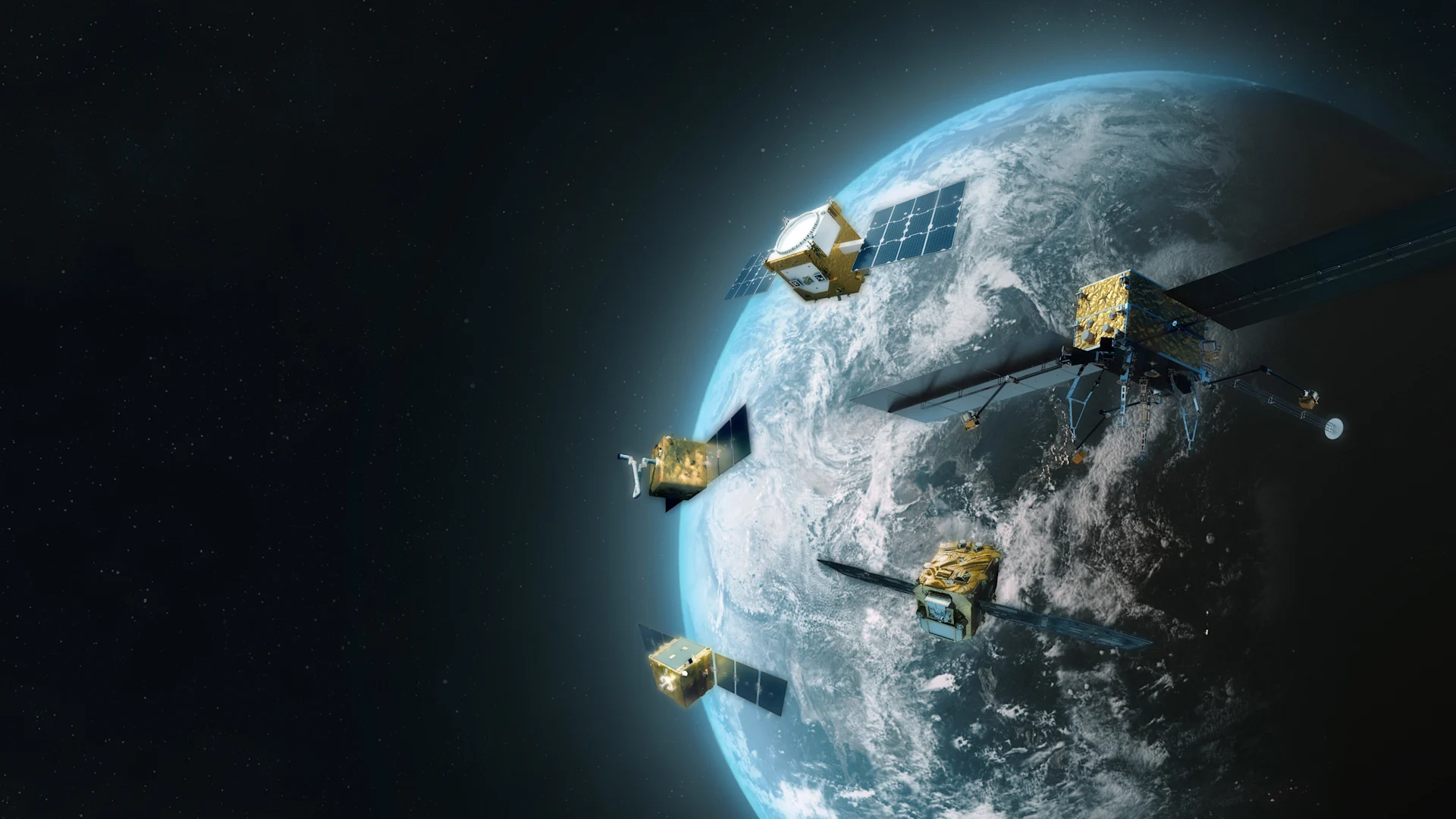
Astroscale U.S. is helping to ensure the USSF has unparalleled in-space logistics capabilities. We are developing groundbreaking operational servicing vehicles capable of refueling satellites, performing life-extension functions, conducting inspection and surveillance missions, and enabling safe disposal, paralleling the KC-10s, KC-135s, and MC-130Js that transformed airpower projection and persistence.
Next year, we are delivering on-orbit refueling capabilities to Space Systems Command via Provisioner. This spacecraft will execute two propellant transfers, the space equivalent of the USAF’s first aerial refueling missions that made global reach possible. It will prove that sustained spacecraft mobility is achievable now.
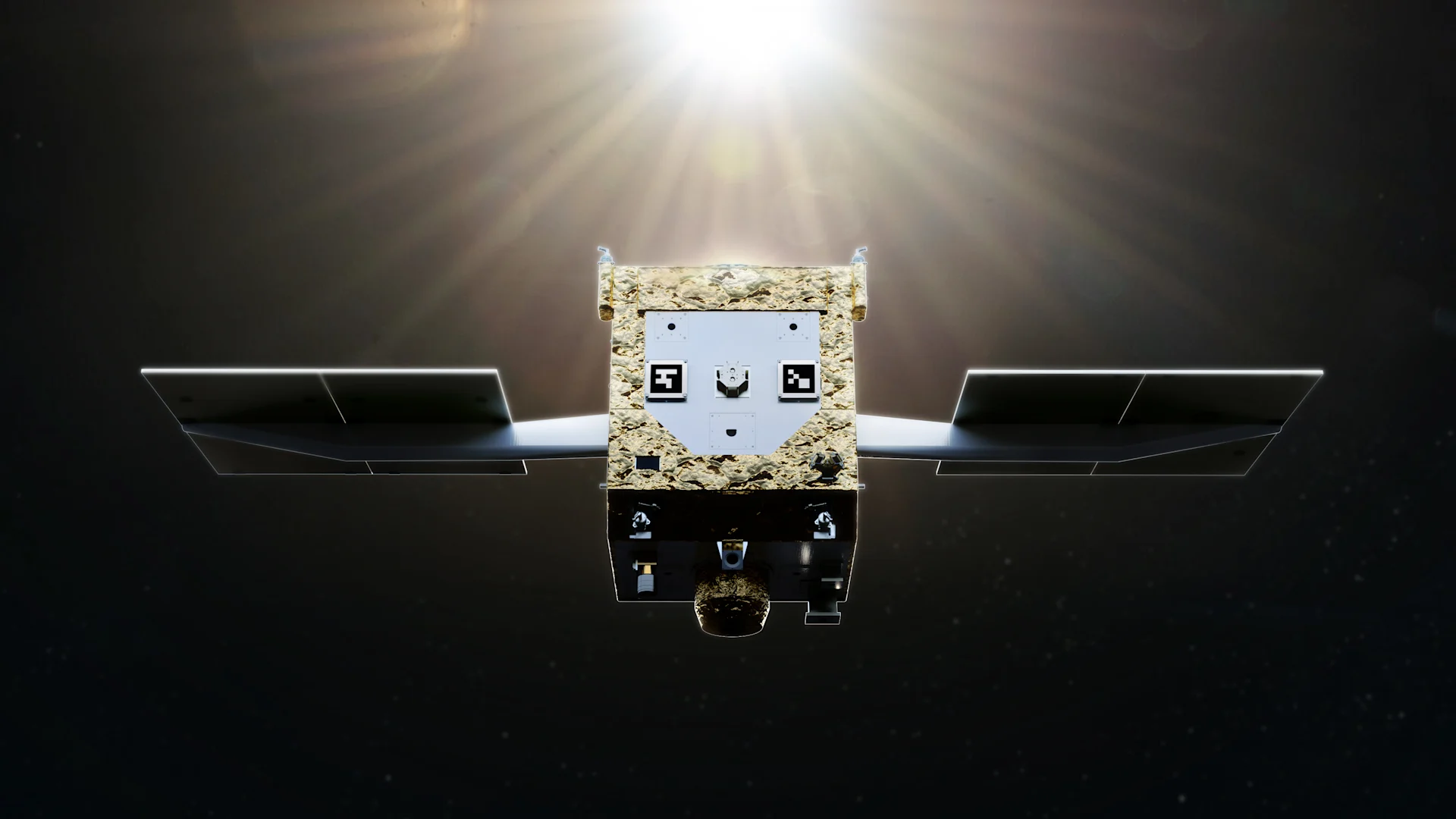
Launching in 2026, Provisioner’s refueling mission will lay the groundwork for scalable, flexible logistics across space.
Astroscale’s global teams are advancing the foundation of a true space-logistics ecosystem, and Astroscale U.S. is contributing to and leveraging these efforts to accelerate U.S. national security on-orbit servicing capabilities. In 2021, Astroscale’s ELSA-d mission became the first commercial spacecraft to capture and release an uncontrolled object in orbit, proving core docking and debris removal technologies. In 2024, Astroscale Japan’s ADRAS-J mission achieved the world’s first rendezvous with a defunct upper stage, demonstrating new levels of in-space inspection and servicing. Astroscale UK’s ELSA-M program is targeting a 2026 launch to advance multi-client servicing and debris-removal for large constellations. Astroscale is showing that on-orbit logistics is not a theoretical capability; it is a maturing, global enterprise.
The Framework for a U.S. Space Logistics Enterprise
U.S. deterrence depends on the credible ability to reconstitute and sustain space capabilities during conflict, not merely replace them afterward. But technology alone will not deliver space power. Sustained advantage requires institutional design. Space Systems Command’s collaboration with Astroscale U.S. is a vital first move, but it must scale into a coherent logistics posture backed by doctrine, budget, and workforce. Based on decades of operational sustainment experience and study, I recommend the following actions:
1. Establish a Dedicated Space Logistics Enterprise and Career Field.
Create a flag-level enterprise staff and dedicated career specialty within the USSF responsible for doctrine, acquisition, requirements, and sustainment planning. Logistics succeeds when experts own the mission end to end.
2. Require Refuel-Ready Spacecraft Designs.
Mandate docking interfaces, propellant-transfer ports, and servicing accommodations across all national security space programs.
3. Procure Operational Servicing Vehicles.
Field a multi-orbit fleet of robotic refuelers, life-extension spacecraft, and inspection and surveillance servicers — the orbital equivalent of the USAF tanker force that underwrites air operations, reconnaissance, and mobility platforms that extend reach and provide constant awareness, maneuverability, and operational continuity.
4. Develop Distributed Orbital Logistics Nodes.
Pre-position depots, fuel reservoirs, and modular storage platforms to sustain persistent maneuver and rapid reconstitution.
5. Expand Tactically Responsive Launch.
Enable rapid replacement or augmentation of degraded constellations with reliable, on-demand launch capability.
6. Protect Logistics Assets.
Ensure orbital logistics vehicles have maneuver margin and autonomy to survive and operate in contested environments.
The Time to Invest in Logistics is Now
The logistics race in space will not be won by who launches most often — it will be won by who can stay in the fight the longest. Every new satellite launched without a servicing SOP or interface, every constellation fielded without refueling options, is another investment in the old paradigm that is being outmaneuvered. Space is no longer a pristine sanctuary; it is a contested theater. And just as air power matured only after it built its sustainment backbone, so too must space power. It is time to treat in-space logistics like the strategic imperative it is.
Wes Norris is Astroscale U.S.'s VP of Business Development, National Security. Learn more about the author here.
All Categories
Recent Posts

Want to Talk?
Let us know how to reach you, and we'll follow up.